
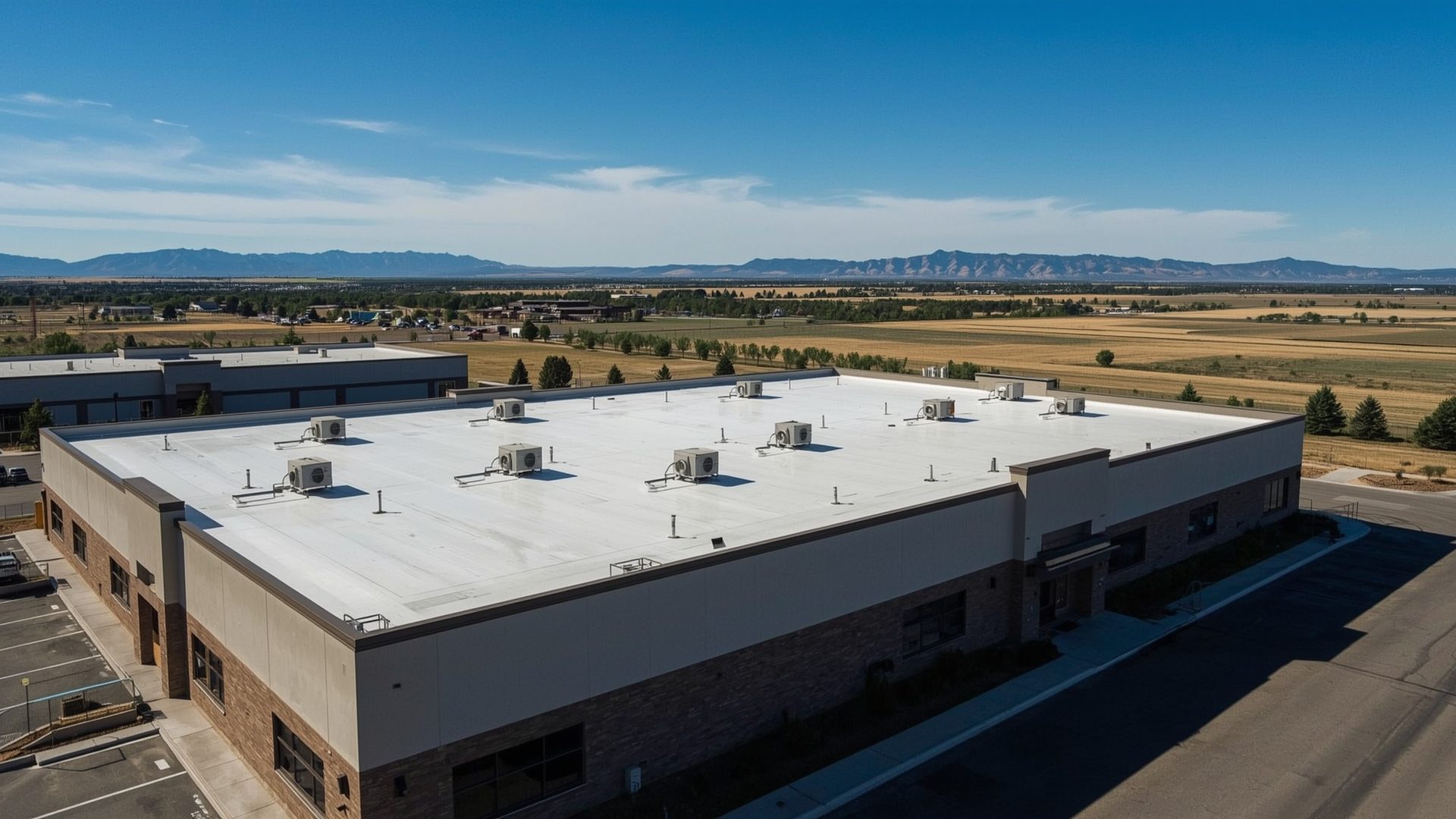
Choosing commercial roofing in Colorado comes down to five things: the roof’s shape and slope, the system that fits it (such as TPO, metal or built-up), how it handles hail and snow load, the energy and maintenance picture, and the contractor installing it. Matching the system to the building, not to the lowest bid, is what protects your property for the long term.
A commercial roof protects more than a building. It protects inventory, equipment, tenants and the business inside. Colorado’s hail, heavy snow and strong sun make the choice more important than in many other states. Here is a clear way to approach it.
What types of commercial roofing are used in Colorado?
Most commercial buildings fall into two groups: low-slope or flat roofs, and steeper roofs that can use metal or tile. The right system depends on the building, not on a trend.
- TPO and other single-ply membranes are common on flat roofs. They are light, reflective and welded at the seams.
- Built-up and modified bitumen roofs use layers for added redundancy on low-slope roofs.
- Metal roofing suits steeper slopes and many commercial designs. It sheds snow well and lasts a long time.
- Stone-coated steel and tile can suit higher-end commercial and mixed-use properties that want the look of traditional materials.
Horn Brothers Roofing installs commercial and residential systems, and we are open about what each one does well and where it has limits. We do not install tar and gravel roofs.
How does a flat roof handle Colorado weather?
Flat and low-slope roofs have little pitch, so water has to be moved off deliberately. Drains, scuppers and slight tapers do that job. If a drain clogs, water can pool and put extra weight and stress on the roof.
Snow adds to the challenge. Heavy, wet snow adds load, and freeze and thaw cycles work on seams and flashing. Sun exposure at altitude is also strong, so a reflective, well-sealed surface matters.
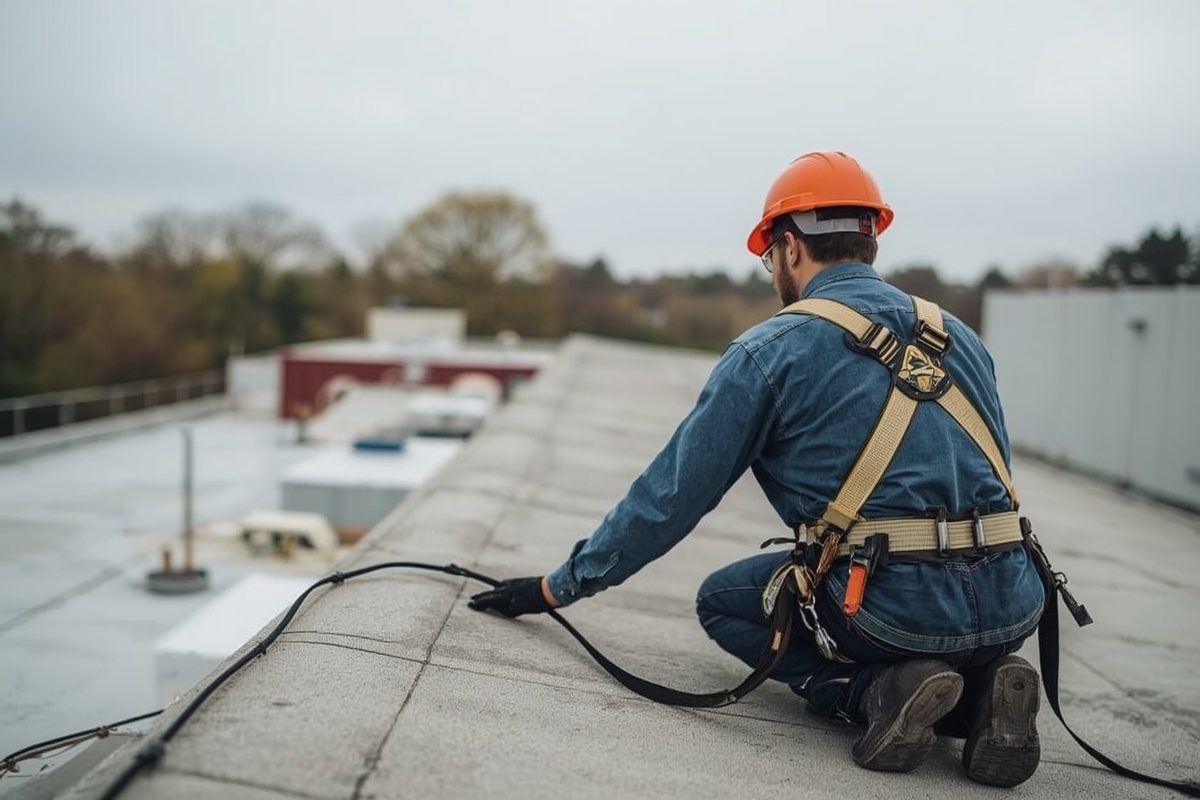
What should you check before choosing a flat roof system?
Ask these questions for any flat roof project:
- What is the condition of the deck and insulation underneath?
- How will water drain, and are the drains and tapers adequate?
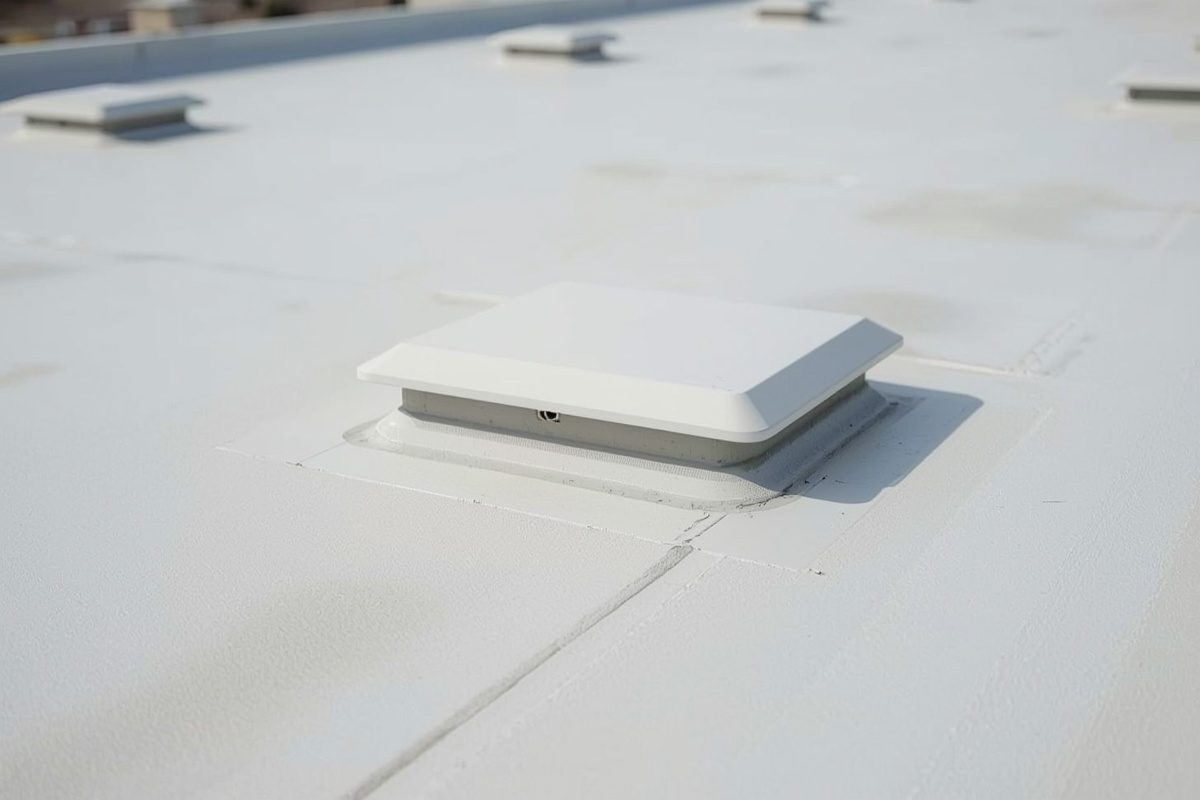
- How are seams, penetrations and rooftop equipment curbs flashed?
- What do hail and snow load look like for this building?
- What manufacturer warranty applies, and who stands behind the workmanship?
Repair, restore or replace a commercial roof?
Not every aging roof needs to come off. A good contractor will tell you honestly which path makes sense.
- Repair fits isolated leaks and damaged flashing on an otherwise sound roof.
- Restoration or recover can suit a roof with life left, where the insulation is dry and the deck is sound.
- Replacement makes sense when moisture has spread through the insulation, when the roof has reached the end of its service life or when repairs are happening too often.
A moisture survey and a careful inspection take the guesswork out of that decision. Repeated patching on a failing roof usually costs more over time than a planned replacement.
What about hail, insurance and storm damage?
Commercial roofs in Colorado see hail often. Hail can bruise membranes and damage metal and flashing in ways that are hard to see from the ground. If your property has had a storm, document the date, take photos and have the roof inspected before small damage becomes a leak.
Insurance claims have their own language and process. Horn Brothers Roofing helps property owners understand documentation and what adjusters look for, so you can make informed decisions. For more on that topic, read our guide to ACV and RCV on a roofing insurance summary.
How do you choose the right commercial roofing contractor?
The contractor matters as much as the material. Look for:
- An established local company with a physical presence and a track record in Colorado
- Experience with your type of roof and building
- Clear scopes of work, written warranties and proof of insurance
- Willingness to explain options, not only to quote one
After major storms, out-of-area crews often appear. An established local roofer is still around years later to honor the work, which is why longevity and reputation count for so much.
Frequently Asked Questions
What is the most common commercial roofing system in Colorado?
Single-ply membranes such as TPO are common on flat and low-slope commercial buildings, while metal is popular on steeper roofs. The right choice depends on the building, budget and use.
How long does a commercial roof last?
Lifespan depends on the system, installation, maintenance and exposure. Well-maintained systems can last for decades, and regular inspections extend that further.
How often should a commercial roof be inspected?
At least once or twice a year, and after any major hail, wind or snow event. Early detection keeps repairs small.
Can a commercial roof be repaired instead of replaced?
Often yes, when the damage is limited and the insulation and deck are sound. A moisture survey shows whether repair or replacement is the better value.
Does Horn Brothers Roofing work on both commercial and residential roofs?
Yes. We serve homeowners and commercial property owners across Denver, Montrose and Colorado.
Plan your commercial roofing project with a local team
Whether you need a repair, a restoration plan or a full replacement, start with an honest inspection and a clear scope. Horn Brothers Roofing works with property owners across Colorado, and our goal is a roof that protects your building year after year. For general information on reflective roofing and energy use, the U.S. Department of Energy is a good starting point.
Request a free estimate to talk through your building and your options.